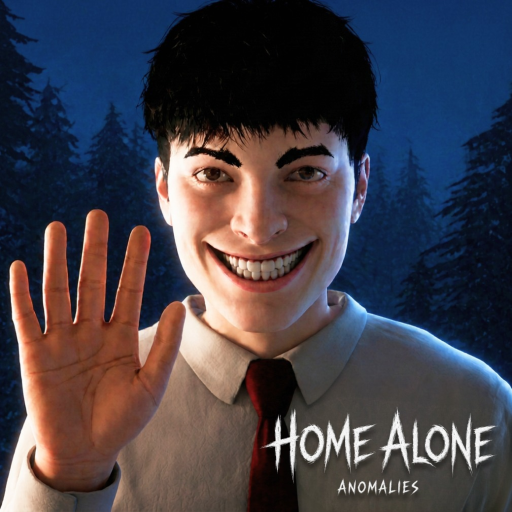
1. The knock: “Police Man”
A uniformed visitor says there is trouble and asks to come in. The story alone can’t be verified — you haven’t called anyone — so channel one stays Unknown.
Choose the visitor at your door and the evidence channels you can actually inspect. Missing evidence stays Unknown — this tool does not guess for you.
Every documented Anomaly in Home Alone (Anomaly) gives itself away through at least one of three evidence channels: the story (does what they claim match the house — a leaking faucet for the Plumber, brown water for City Maintenance, smoke for the Firefighter?), the voice (a Classmate that dips into a gravelly register, a Party Girl with an echo, a Gym Bro an octave too high), or the cameras (the laptop on the coffee table, night vision on — a giant Lost Girl, a seven-foot alien Secret Agent, a face pressed against the lens). Pick the visitor and the channels you can inspect below; anything you could not check stays Unknown, and the safe move for an Unknown verdict is the porch light, not the door.
Unknown — do not guess. Check the current experience and compare a dated player report before making a door decision.
Reports can change after updates. This tool never provides a guaranteed safe/unsafe verdict, rate, reward, or fixed outcome.
A documented case from the visitor guides, checked 2026-10-03.
A uniformed visitor says there is trouble and asks to come in. The story alone can’t be verified — you haven’t called anyone — so channel one stays Unknown.
Channel three is checkable: look at the street/front camera. A police car parked outside means the visitor is real — open the door for the reward. A beat-up van means the Anomaly version: porch light off, no exceptions.
Every documented visitor works this way: one channel usually settles it. The full tells list — with the guide that documents each — lives on the visitors and anomalies reference.
Community-documented quick checks, checked 2026-10-03. Full table with sources and aliases on the wiki page.
| Visitor | Real | Anomaly tell |
|---|---|---|
| Police Man | A police car is parked outside | A beat-up van is parked out front instead |
| Cat Lady | A black cat sits by the parents' bed | The cat in the parents' bedroom is white, or its color doesn't match her story |
| New Neighbour | Standing normally on camera | Face pressed against the camera lens under night vision |
| Classmate | Voice stays normal | Voice flickers into a gravelly, demonic register |
| Guy Who Needs To Pee | Same height on every camera | Looks suddenly taller under night vision |
| Dumped Girl | Crying on camera, matching her story | Smiling and staring straight into the camera instead of crying |
| Streamer | Holding the giant phone | No phone in hand despite claiming to stream |
| Firefighter | Your oven is actually on fire / smoking | No smoke anywhere in the kitchen |
| Plumber | The bathroom/bath faucet is really leaking | Every faucet is dry |
| City Maintenance | The kitchen sink runs brown water | Water runs clear or not at all |
Ten of the twenty-plus documented visitors shown; the full table — including the never-safe Vampire and the refusal-cost neighbors — is on the builds and entities page.
The game's whole tension is deciding under partial information. Tools that promise a safe/unsafe verdict for every visitor invent certainty the sources don't have.
Sanity starts at 100. Letting an Anomaly in — or turning away a real person — drains it. As it falls, your vision darkens, you hear things, and the house visibly degrades: broken furniture, graffiti, fires. At zero, the run is over (All Things How; IGN wiki).
Source: Fan guides + Publisher wiki
The switch to the right of the front door turns off the porch light, which turns a suspicious visitor away without opening the door. Open the door only when you believe the visitor is real (All Things How; RPS).
Source: Fan guides
Community guides converge on the same routine: (1) verify the visitor's story against the house itself, (2) listen for a voice that glitches, deepens, or echoes, and (3) cycle the CCTV views on the laptop (coffee table) with night vision on (All Things How; Gamezebo; RPS).
Source: Fan guides
A chore board in the living room offers four random chores per refresh. Chores are short minigames, and earnings from chores plus correct door answers build toward the allowance target — All Things How documents it as $180 per night (All Things How, July 25, 2026).
Source: Fan guides
It structures the three evidence checks community guides recommend — the visitor's story versus the house, the voice, and the CCTV/night-vision view — for the visitor actually at your door, and it keeps the result Unknown when you could not inspect a channel. It is a discipline tool, not an answer key: the game has no published roster with guaranteed tells.
Fall back to the safest documented default: if you cannot verify the story, the voice, and the camera view, turn off the porch light instead of opening the door. Refusing a real person can cost some Sanity, but letting an Anomaly in drains far more — and IGN documents neighbors whose refusal breaks equipment, so weigh a known friendly against a blind accept.
Per the published guides, the CCTV laptop with night vision catches the visual anomalies (giant Lost Girl, alien Secret Agent, face-pressed New Neighbour), the audio check catches the voice anomalies (Classmate, Party Girl, Gym Bro), and the story check catches the rest (brown water for City Maintenance, smoke for the Firefighter, the cat's color for the Cat Lady). Most documented visitors are catchable by exactly one channel — which is why skipping a channel is how Anomalies get in.
No guide we checked documents their tells yet — Ghost Hunter, Grandma, Creepy Twins (Update 9), Girl Scout and Hacker (Update 10), Bride and TikTok Influencer (Update 11) are officially named but behaviorally undocumented. The tool still helps: run the same three checks on them and note what you saw, then compare notes across nights.
No. Guides disagree on names and on some details, the developer has published no official tell table, and updates add undocumented visitors. Treat every verdict as a lead to verify in your own run — that is exactly why the tool keeps Unknown as a first-class answer.
The full night loop the checks live inside.
Every reported name, alias, and watch term.
Assign the door, camera, and chore roles.
Full tells table with sources and aliases.
Plan Coins, allowance, and lobby items.
What the newest patch changed and what to recheck.